


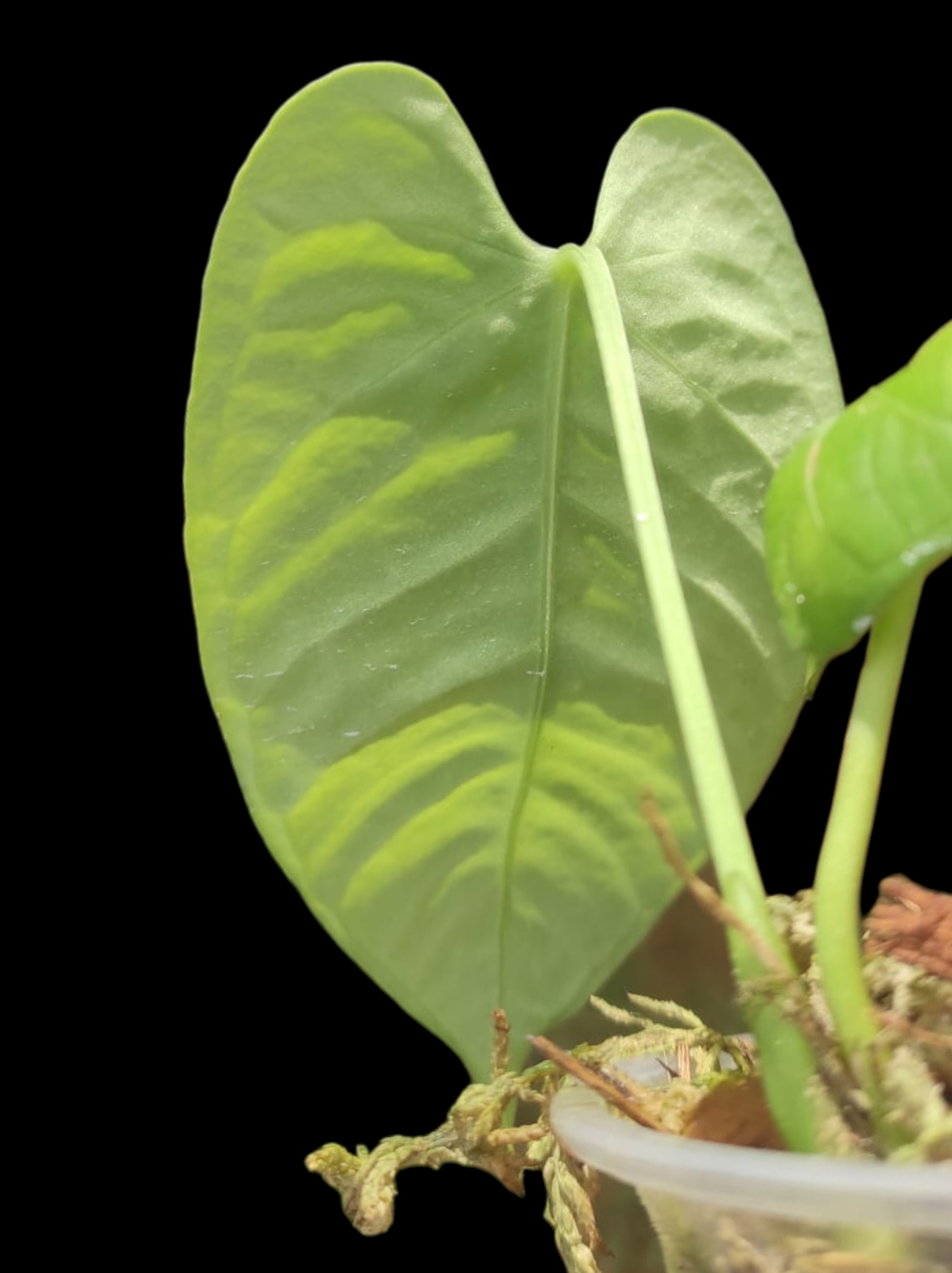
WATCH YOUR EXACT PLANT IN MOTION!

Anthurium Warocqueanum Wild Ecotype (EXACT PLANT)
$99.00

Anthurium Peltigerum 'Turtle Shell' (EXACT PLANT)
$69.00

Anthurium Pulcachense Wild Ecotype (EXACT PLANT)
$49.00

Anthurium sp. 'Amazon Red Petiole' (EXACT PLANT)
$129.00

Anthurium Garskinii Croat with 2 Leaves (EXACT PLANT)
$199.00

Anthurium sp. 'Lanceolatus' (EXACT PLANT)
$149.00

Anthurium sp. 'Huanuco Velvet' Wild Ecotype (EXACT PLANT)
$79.90

Anthurium sp. 'Kunayala Glow' Native to Panama (EXACT PLANT)
$129.00
Anthurium Warocqueanum Wild Ecotype (EXACT PLANT)
Invite the Queen Anthurium warocqueanum into your home and embrace the regal splendor of nature. As the undisputed queen of Anthuriums, this plant will elevate your space with an air of elegance and sophistication.
Crown your plant collection with the queenly Anthurium warocqueanum. Secure your piece of botanical royalty today and experience the allure of this rare and tropical treasure.
Anthurium Warocqueanum Wild Ecotype (EXACT PLANT)
$99.00
Anthurium Peltigerum 'Turtle Shell' (EXACT PLANT)
Introducing one of the most unusual and coveted species in the aroid world: the Anthurium peltigerum. Native to the tropical regions of Ecuador and Colombia, this extraordinary plant is one of only three known Anthurium species to feature a true peltate leaf attachment. Unlike typical leaves where the stem joins at the edge, the petiole of this species connects directly to the underside of the leaf, creating a striking, shield-like architecture. This unique biological trait, combined with its intricate leaf pattern, has earned it the well-deserved common name of the "Turtle Shell" Anthurium, making it a definitive statement piece for any serious collector.
Anthurium Peltigerum 'Turtle Shell' (EXACT PLANT)
$69.00
Anthurium Pulcachense Wild Ecotype (EXACT PLANT)
Introducing "Anthurium Pulcachense," a true botanical gem, and a native of the middle Río Huallaga valley in Pulcache, San Martín, Peru. This exquisite plant is a testament to the unique beauty of its native region, and its remarkable characteristics make it a prized addition to any plant collection.
Anthurium Pulcachense Wild Ecotype (EXACT PLANT)
$49.00
Anthurium sp. 'Amazon Red Petiole'(EXACT PLANT)
Discover the captivating Anthurium sp. 'Amazon Red Petiole', a rare gem native to the lush landscapes of San Martin, Peru, thriving along the banks of the Cumbaza River's mountainous edges. This unique and exotic plant is a sight to behold with its vibrant and intense red hue adorning the petiole and veins on the underside of the leaves, beautifully contrasting against the lush green foliage.
A true standout among Anthuriums, this particular species stands alone in its remarkable features, showcasing a striking, singular beauty that sets it apart from other plants. Its exclusive characteristics make it a must-have for any plant enthusiast seeking the extraordinary in their collection.
Anthurium sp. 'Amazon Red Petiole' (EXACT PLANT)
$129.00
Anthurium Garskinii Croat with 2 Leaves (EXACT PLANT)
Officially named and described in 2010 by renowned American botanist Thomas Bernard Croat, a world specialist in aroids, this endemic gem from the cloud forests of Colombia (between 285 and 1250 m in altitude) bears his hallmark of botanical distinction. It is not just a plant; it is a collector's piece with a scientific pedigree.
Its morphology is pure natural sculpture: sagittate-cordate leaves, evoking arrowheads or elongated hearts, with rounded basal lobes that sometimes overlap and a sharp, acuminate apex. With a coriaceous texture and unmatched rigidity, the upper surface displays an intense, dark green with a high waxy sheen, making the foliage appear perpetually fresh, while the underside reveals a much paler or yellowish tone, creating a fascinating bicolor contrast. The thick, cylindrical petiole inserts centrally at the base, supporting this botanical wonder.
Anthurium Garskinii Croat with 2 Leaves (EXACT PLANT)
$199.00
Anthurium sp. 'Lanceolatus'
Anthurium sp. 'Lanceolatus' | (Actual Plant You'll Receive!)
Anthurium sp. 'Lanceolatus' (EXACT PLANT)
$149.00
Anthurium sp. 'Huanuco Velvet'
Introducing the Anthurium sp. Huanuco Velvet - a botanical treasure hailing from the heart of the Central Amazon rainforest, renowned for its lush and humid tropical climates. Nestled amidst the mist-covered mountains, this Anthurium finds its perfect habitat.
While not officially classified as a distinct species, the Anthurium sp. Huanuco Velvet boasts a unique allure that has captivated plant enthusiasts worldwide. Its leaves, with their velvety texture and deep, dark green hue, exude an air of elegance and sophistication that makes it highly sought after by collectors.
Anthurium sp. 'Huanuco Velvet' Wild Ecotype (EXACT PLANT)
$79.90
Anthurium sp. 'Kunayala Glow'
Born in the ancestral lands where Panama and Colombia intertwine, the Anthurium sp. "Kunayala Glow" emerges as a hidden treasure of the most humid and lush tropical biomes. In this magical corner of the world, where the jungle breathes life and mist dances through the treetops, this botanical jewel thrives as a subshrub, embraced by humidity and surrounded by endless green.
Anthurium sp. 'Kunayala Glow' Native to Panama (EXACT PLANT)
$129.00